

Buying an energy-efficient appliance doesn't necessarily mean choosing the model with the lowest price. Capacity, energy consumption, features, and frequency of use also affect the actual cost over several years.
To save money wisely, the goal is therefore to find the right balance between purchase price, consumption, and the household’s actual needs.
1. Determine your needs before looking at the price
Before comparing models, start by identifying your household's actual needs. Be sure to consider the following:
The number of people in the household
Frequency of use
Available space
The required capacity
Household Habits
The first way to save money is often to avoid buying something larger or with more features than you need.
2. Compare the actual cost, not just the purchase price
The listed price is still significant. However, it represents only a portion of the actual cost of the appliance. To compare two appliances, consider:
The purchase price
Electricity consumption
Water consumption, when applicable
Frequency of use
The Interview
The Features That Are Actually Useful
A slightly more expensive appliance may sometimes be a better choice if it better suits the household's actual needs.
3. Shop at clearance sales without relying solely on discounts
During a clearance sale, a significant discount can catch your eye. However, the discount percentage alone isn't enough to determine whether the device is actually a good buy. Instead, compare:
The price
Product Condition
Capacity
Dimensions
Functions
The warranty or applicable terms and conditions
Intended use
So, two appliances with different discounts can offer very different value depending on your kitchen and your habits.
A good deal isn't just the device with the biggest discount, but the one that truly meets your needs at the best price.
4. Use energy data to compare appliances
When two appliances meet your needs and are priced similarly, EnerGuide data and ENERGY STAR certification can help you choose between them based on their energy efficiency.
5. Refrigerator: Avoid Paying for Unnecessary Capacity
When shopping for a refrigerator, start by comparing capacity, layout, and dimensions. A larger model is only worth considering if its extra space actually meets your household’s needs.
Next, compare the energy consumption of appliances of similar size. This will help you strike a balance between usable space, how well the appliance fits into your kitchen, and operating costs.
6. Dishwasher: Consider the Cost Per Use
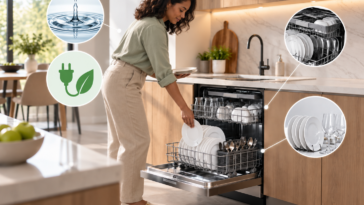
When choosing a dishwasher, consider its water consumption, energy consumption, and capacity. A dishwasher that’s suited to your typical load size can help you avoid running extra cycles.
In addition, the available cycles and the arrangement of the baskets directly affect daily use. It is therefore best to choose a model suited to your loads rather than one that simply has more features.
7. Stove: Choose the Technology Based on How You'll Use It
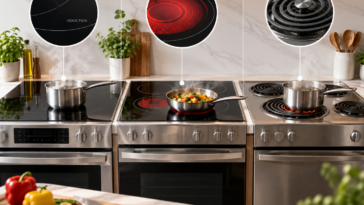
Induction, glass-ceramic, and coil burners do not heat in the same way or offer the same level of responsiveness. Your choice should therefore take into account not only the purchase price but also how often you cook.
Therefore, a more expensive technology is only worth it if its benefits align with your specific needs. Compare the cooking surface, your cooking habits, and your budget before making a decision.
8. Don't pay for unnecessary features
An additional feature is only worthwhile if it meets a real need. Therefore, avoid paying extra for technologies that will rarely be used.
Before choosing an option, simply ask yourself if it will actually improve your day-to-day experience. If the answer is no, it shouldn't be a top priority.
9. How can you compare products before buying?
Before finalizing your purchase, try this simple method:
Make sure the capacity and dimensions are suitable for your fireplace and kitchen.
Compare devices in the same category and with similar uses.
Review the price, the product's condition, and the applicable terms and conditions.
Consider the cost of ownership when several models meet your needs.
Eliminate the features that don't provide you with real value.
This approach allows for a more meaningful comparison of value for money than a discount alone.
Conclusion
To save money on kitchen appliances, start by considering your needs and budget rather than the advertised discount. Then compare the actual cost, the product’s condition, its dimensions, capacity, and the features you’ll actually use.
During a clearance sale, the best choice isn't necessarily the cheapest appliance or the one with the biggest discount. It's the one that offers the best balance of price, usefulness, and operating costs for your household.

 No products in the cart.